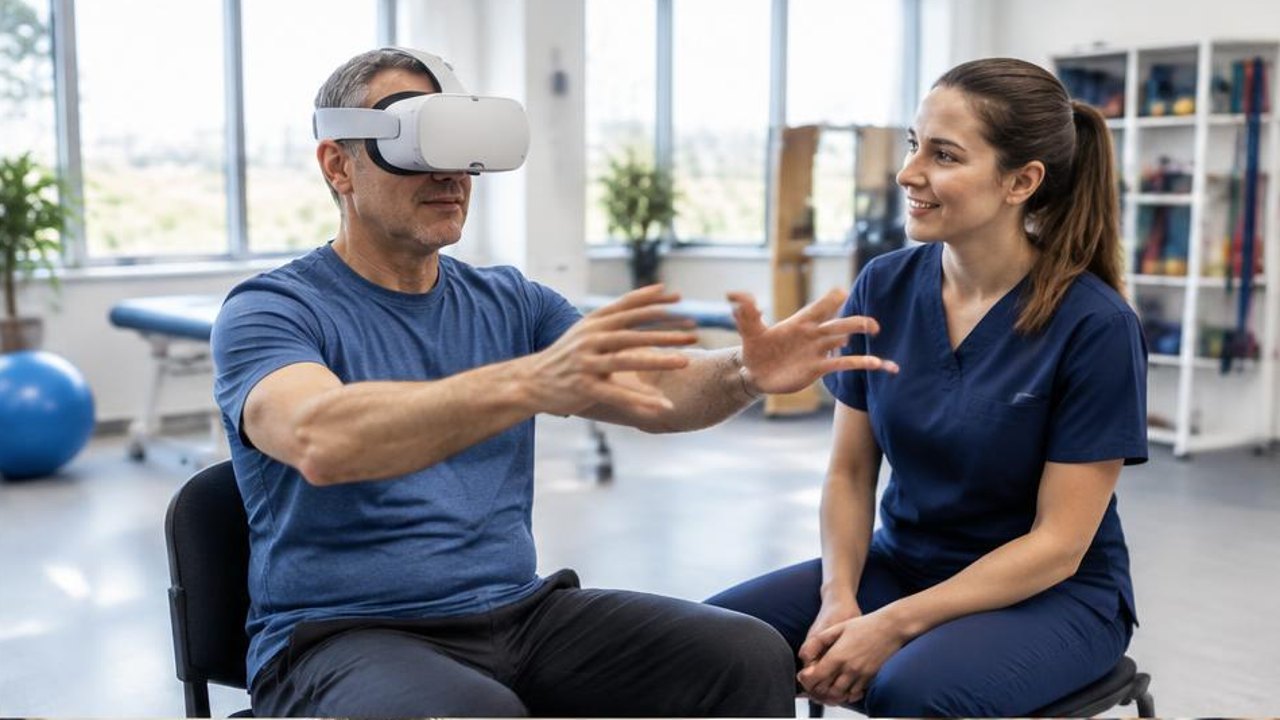
Virtual Reality After Stroke: The Comparator Matters as Much as the Headset
Novel equipment does not settle effectiveness
Virtual rehabilitation can look different from conventional therapy without necessarily improving recovery. The comparison group and amount of practice are crucial. The 2025 Cochrane review covers approaches ranging from screen-based games to immersive rehabilitation systems. These differ in feedback, tracking, difficulty and therapist involvement, so pooled findings do not endorse every commercial product.
Replacement versus extra treatment
Replacing an equal amount of conventional therapy asks whether a delivery method is more effective. Adding virtual practice to usual care may give one group more total rehabilitation. Improvement then cannot automatically be attributed to immersion rather than extra practice. This distinction was already important in the 2017 review and remains important in the update.
Publication date is not search date
The newer review searched trial registries through September 2023. A 2025 publication therefore should not be described as including every development through 2025. It prioritizes upper-limb function and activity while considering mobility, cognition, daily activities, participation, quality of life and adverse events. Better performance inside a game should not substitute for those broader outcomes.
Questions before adopting a system
Study quality, participant selection, dose and differences between devices affect interpretation. A task score does not prove a particular neuroplastic mechanism. Selected participants may differ from people with significant visual, cognitive or balance difficulties. Ask what real-life goal the device targets, whether it adds or replaces practice and how progress is checked outside software. Screening and supervision matter with immersive equipment. Cost and novelty are not effectiveness measures. The program should fit the person and clinical goal, not the other way around.
This evidence supports informed conversations, not an individualized prediction. Study populations and comparison conditions matter when considering how findings apply to a particular person. Bring your priorities and questions to a qualified professional who can assess your circumstances.
Sources
This article is for general information, not individual medical advice. Illustration is AI-generated and does not depict actual study participants.
Frequently Asked Questions
- What does the evidence support?
- The newer review searched trial registries through September 2023. A 2025 publication therefore should not be described as including every development through 2025. It prioritizes upper-limb function and activity while considering mobility, cognition, daily activities, participation, quality of life and adverse events. Better performance inside a game should not substitute for those broader outcomes.
- How should I interpret the findings?
- Consider the population, comparison treatment and outcomes studied. Findings do not guarantee the same result for an individual.
- What should I discuss with my clinician?
- Ask how this evidence fits your goals, current abilities, safety needs and existing treatment plan.
Written by
Neuroplasticity News Editorial Team
The Neuroplasticity News editorial team covers brain science, rehabilitation research and clinical trials, translating peer-reviewed evidence into clear, accurate reporting for patients, families and professionals.
 PreviousRehabilitation Progress: Measuring What Matters When Change Is Uneven
 NextConcussion Exercise Research: Why “Below the Symptom Threshold” Matters