Training-Induced Brain Change Persists After Spinal Cord Injury
Severe injury to the nervous system raises an uncomfortable question about rehabilitation: does the brain retain the capacity to change, or does ongoing degeneration close the door on it?
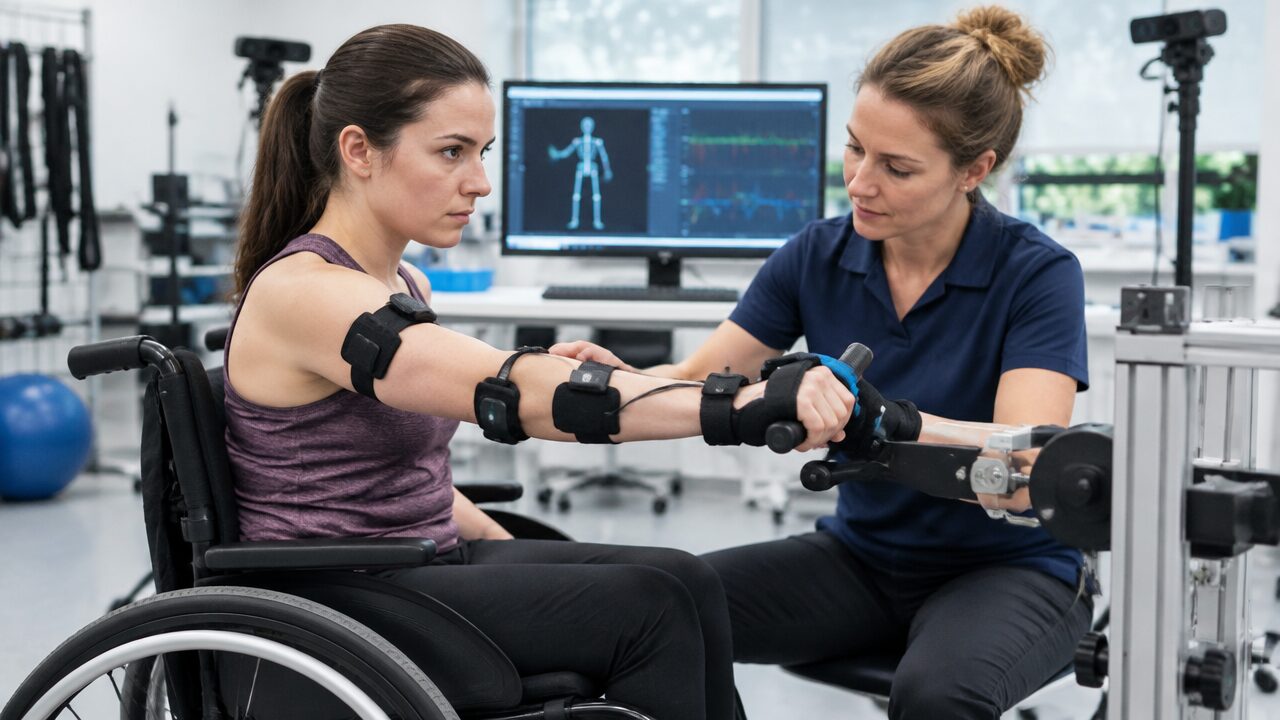
A study published in Communications Biology addressed that question directly, using spinal cord injury as a model of severe motor and sensory disruption to test whether training-induced structural plasticity in the brain is preserved despite ongoing neurodegeneration. The comparison group was 32 healthy controls and 17 people with chronic spinal cord injury.
Why this is a hard test
Spinal cord injury is one of the less forgiving settings in which to study plasticity. The signal between brain and body is disrupted, the affected pathways can continue to change over time, and the person is often years past the initial injury rather than in a window of spontaneous recovery.
If the brain's ability to remodel in response to training depended on intact input from the body, or on the absence of ongoing degeneration, spinal cord injury is where you would expect that dependency to show.
What the findings mean
The study's framing is that training-induced structural plasticity is investigated in a population where it might reasonably be expected to be impaired, and that understanding how the injured nervous system adapts to training is key to advancing rehabilitation across neurological disorders.
That matters for two reasons.
- It supports the basis of rehabilitation. If the brain could no longer remodel, intensive training would be reduced to maintaining strength and preventing complications rather than restoring function. Evidence of preserved plasticity keeps the more ambitious goal on the table.
- It generalises cautiously. The same principle is being examined in other neurological conditions. A related line of work randomised levodopa-treated people with Parkinson's disease to a three-week digital intervention or a placebo app to examine motor-learning neuroplasticity, published in npj Parkinson's Disease.
What it does not mean
Preserved plasticity is not the same as restored function, and the gap between those two statements is where most over-claiming happens.
Structural change on an image is a biological finding. Whether it translates into a meaningful improvement in a person's daily abilities depends on the specific training, its intensity and duration, the individual's injury, and the outcome being measured. A group-level difference in a brain measure does not predict an individual's recovery.
It is also worth noting the sample size: 17 people with chronic injury. That is enough to ask the question and enough to generate a signal, and it is not enough to settle a treatment question. Larger trials with functional outcomes are the next step, not an optional extra.
The broader lesson
The most useful thing this literature is doing is replacing a vague claim — the brain can rewire — with specific, testable ones: this population, this training, this measured change, over this period. Those are the findings that rehabilitation programs can actually be built on.
This article is educational and is not medical advice. Rehabilitation decisions belong with your treating team.
Frequently Asked Questions
- Can the brain still change after a spinal cord injury?
- A study in Communications Biology investigated whether training-induced structural plasticity is preserved in chronic spinal cord injury despite ongoing neurodegeneration, using healthy controls for comparison.
- Does preserved plasticity mean recovery is possible?
- It supports the biological basis of rehabilitation, but structural change on an image is not the same as a proven functional gain for an individual.
- How strong is this evidence?
- Encouraging but early. The study included 17 people with chronic injury, so larger trials measuring function are needed before treatment conclusions.
Written by
Neuroplasticity News Editorial Team
The Neuroplasticity News editorial team covers brain science, rehabilitation research and clinical trials, translating peer-reviewed evidence into clear, accurate reporting for patients, families and professionals.
 PreviousRehabilitation Progress: Measuring What Matters When Change Is Uneven
 NextConcussion Exercise Research: Why “Below the Symptom Threshold” Matters