Three Trials Now Testing Neuroplasticity Treatments for Concussion
Most people who sustain a concussion recover. A smaller group does not, and their symptoms — dizziness, headache, fatigue, difficulty thinking and remembering — can persist long after the injury itself has healed. This is the population where the evidence base is thinnest and where unsupported treatments are most common.
Several active trials are now testing whether deliberately targeting plasticity helps. Reading them properly is more useful than waiting for a headline.
Stimulation plus cognitive training
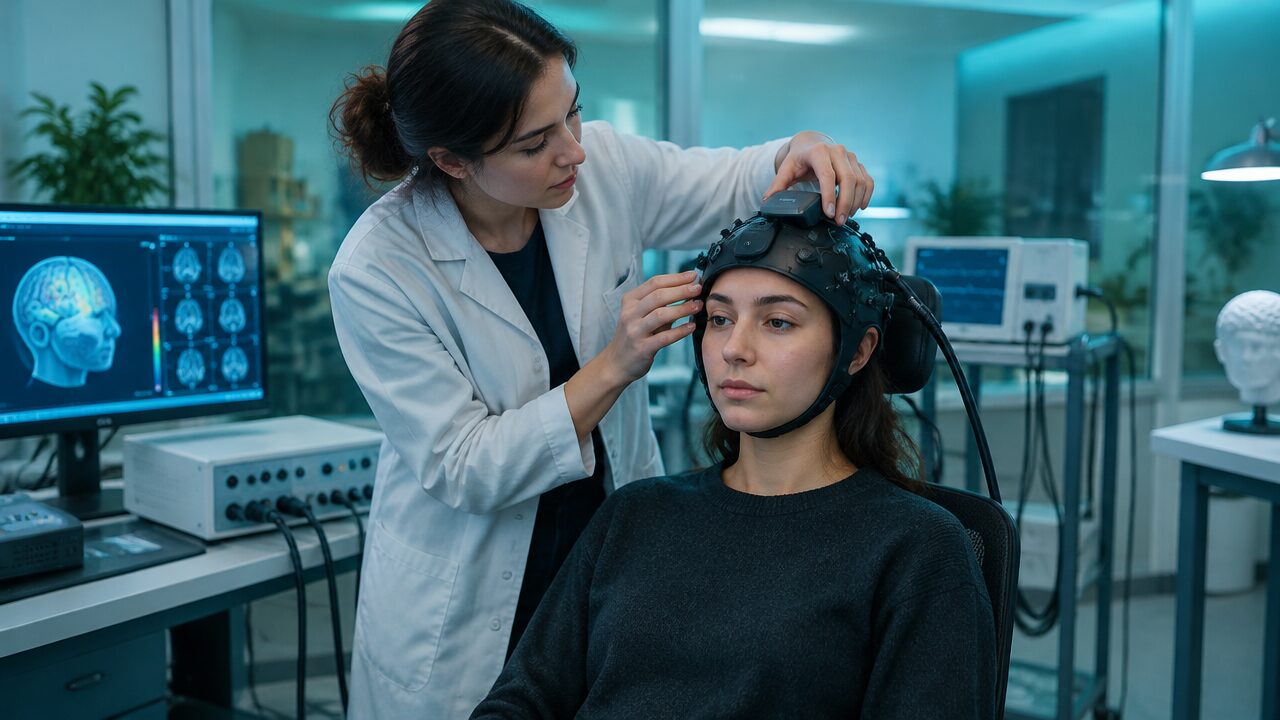
A trial listed on ClinicalTrials.gov as NCT07246993 investigates combining transcranial direct current stimulation with cognitive training as an approach aimed at improving function in people with persistent post-concussive cognitive symptoms.
The logic is the same one driving stroke research: stimulation is used to make a region more responsive, and the training that follows is intended to produce the actual learning. The important detail is that the trial is testing the combination, not stimulation alone, which is a more realistic design and a harder one to pass.
Rehabilitation, delivered differently
The STAR-C trial, NCT06855186, is a randomised controlled trial comparing a symptom-targeted rehabilitation approach delivered in person, delivered by telehealth, or not delivered at all, with a wait-list control. It is run by the Henry M. Jackson Foundation for the Advancement of Military Medicine and began recruiting in September 2025.
Two things make this design informative. A wait-list control sets a fair baseline for how much people improve without the intervention. And comparing in-person against telehealth asks a practical question: if the effect is real, does it need a clinic visit, or can it be delivered remotely? Answers to that question change who can access care.
Personalised stimulation
A further trial, NCT06073886, examines personalised brain stimulation for chronic concussive symptoms, targeting the specific symptoms a person experienced or that worsened after injury, with the stated goal of reducing the difficulty those symptoms cause in daily functioning.
Personalisation is the idea that most of this field is moving toward. Concussion symptoms are heterogeneous, and a single stimulation target applied to everyone is unlikely to fit everyone. The trade-off is that personalised protocols are harder to standardise, which makes them harder to test fairly.
How to read these trials
- Recruiting is not results. A trial that is running tells you a question is being asked, not what the answer is.
- Control design decides everything. Sham stimulation and wait-list controls are what separate a real effect from expectation and extra contact.
- Function beats symptom counts. An improvement in daily functioning is more meaningful than a change on a questionnaire.
- Small early trials mislead often. Pilot signals frequently shrink in larger confirmatory studies.
For someone currently living with persistent symptoms, the practical step is a clinician experienced in concussion care, and an informed conversation about whether a trial is appropriate. The clinicaltrials.gov listings above are the primary registry for finding active studies.
This article is educational and is not medical advice. Seek medical assessment after any head injury.
Frequently Asked Questions
- Are there treatments being tested for long-lasting concussion symptoms?
- Yes. Active trials are testing transcranial direct current stimulation with cognitive training, symptom-targeted rehabilitation in person or by telehealth, and personalised brain stimulation.
- Can I join one of these trials?
- Eligibility varies by study. The listings on ClinicalTrials.gov are the primary source for recruiting status and contact details, and a concussion clinician can advise whether a study fits.
- Does brain stimulation treat persistent post-concussion symptoms?
- That is the question under study. These are experimental approaches, and no such treatment is established for this condition.
Written by
Neuroplasticity News Editorial Team
The Neuroplasticity News editorial team covers brain science, rehabilitation research and clinical trials, translating peer-reviewed evidence into clear, accurate reporting for patients, families and professionals.
 PreviousRehabilitation Progress: Measuring What Matters When Change Is Uneven
 NextConcussion Exercise Research: Why “Below the Symptom Threshold” Matters