Aphasia Recovery: Practicing Communication Beyond Naming Pictures
Everyday communication is the goal
Ordering lunch, sending a message or explaining a symptom can become difficult when a stroke affects language. Aphasia rehabilitation aims to make these exchanges easier, not simply improve performance on naming exercises. A personal communication goal is often the most useful starting point. Aphasia can affect speaking, understanding, reading and writing. It is a language disorder, not a direct measure of intelligence, although other cognitive difficulties can occur alongside it.
Making practice meaningful
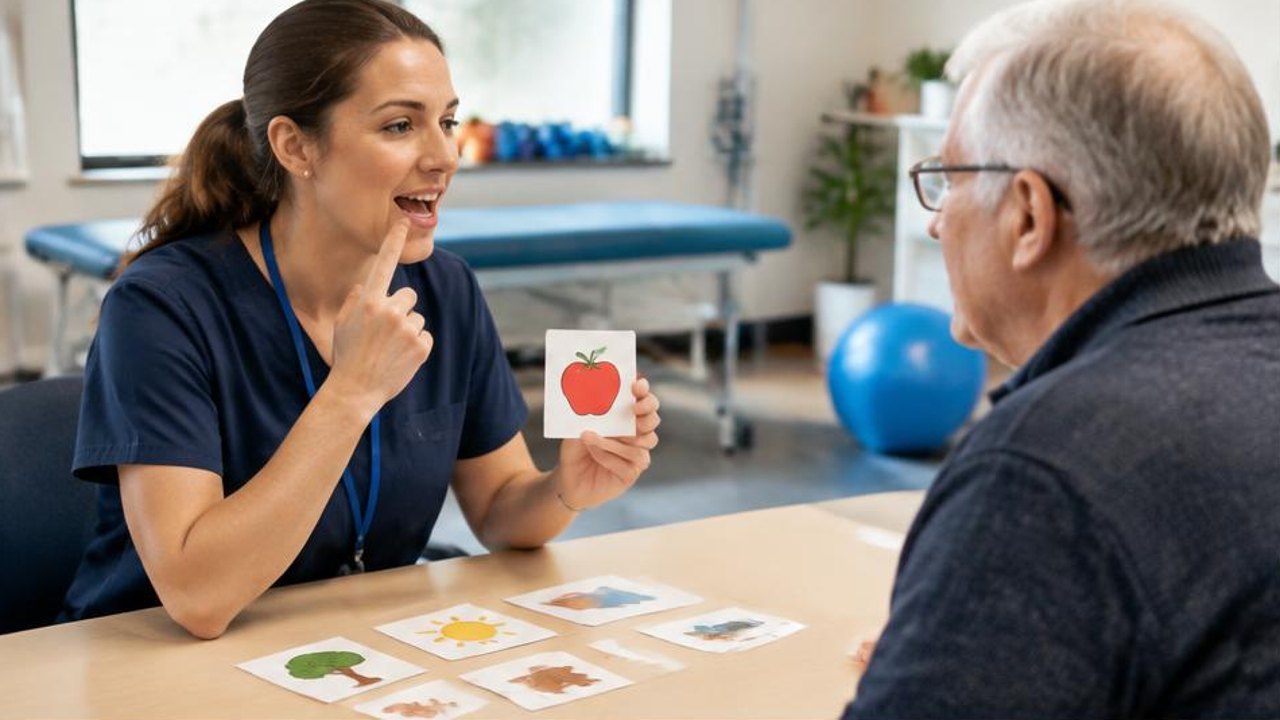
A speech-language pathologist can turn a goal into structured practice: rehearsing a medical appointment, using a menu or preparing a telephone script. Pictures, writing, gestures and communication devices can support independence while language work continues. Ask which activities to repeat at home and how much help to provide. Allow time for responses, reduce competing noise and confirm the intended message rather than correcting every word.
What a chronic-stroke trial found
A 2017 randomized trial tested intensive speech-language therapy in people with aphasia lasting at least six months after stroke. It found improved verbal communication in everyday-life scenarios compared with deferred intensive treatment. Participants were aged 70 or younger. The findings do not establish an ideal schedule for everyone, prove that more therapy is always better or guarantee restoration of previous abilities. Fatigue, severity, access and other health conditions matter.
Questions for the rehabilitation team
Ask for goals that connect therapy with daily situations and a manageable home plan. Measure participation as well as test scores. An exchange completed using a gesture or written keyword is still successful communication. Do not turn every conversation into an examination. New, sudden language difficulty requires emergency assessment because it may signal another stroke.
This evidence supports informed conversations, not an individualized prediction. Study populations and comparison conditions matter when considering how findings apply to a particular person. Bring your priorities and questions to a qualified professional who can assess your circumstances.
Sources
This article is for general information, not individual medical advice. Illustration is AI-generated and does not depict actual study participants.
Frequently Asked Questions
- What does the evidence support?
- A 2017 randomized trial tested intensive speech-language therapy in people with aphasia lasting at least six months after stroke. It found improved verbal communication in everyday-life scenarios compared with deferred intensive treatment. Participants were aged 70 or younger. The findings do not establish an ideal schedule for everyone, prove that more therapy is always better or guarantee restoration of previous abilities. Fatigue, severity, access and other health conditions matter.
- How should I interpret the findings?
- Consider the population, comparison treatment and outcomes studied. Findings do not guarantee the same result for an individual.
- What should I discuss with my clinician?
- Ask how this evidence fits your goals, current abilities, safety needs and existing treatment plan.
Written by
Neuroplasticity News Editorial Team
The Neuroplasticity News editorial team covers brain science, rehabilitation research and clinical trials, translating peer-reviewed evidence into clear, accurate reporting for patients, families and professionals.
 PreviousRehabilitation Progress: Measuring What Matters When Change Is Uneven
 NextConcussion Exercise Research: Why “Below the Symptom Threshold” Matters